What Size Tablecloth Do I Need? The Complete UK Guide
If you've ever found yourself standing in front of your dining table with a tape measure and no idea what you're doing, you're not alone. Choosing the right tablecloth size is one of those things that sounds straightforward but trips up almost everyone the first time.
This guide covers everything you need to know — whether you're dressing a kitchen table for a Sunday roast, setting up for a wedding reception, or ordering tablecloths in bulk for a restaurant or event space.
The Key Term You Need to Know: Drop Length
Before we get into specific sizes, it helps to understand what the "drop" is — because everything else flows from this.
The drop is how far the tablecloth hangs down over the edge of the table. If your table is 75cm tall and your tablecloth reaches the floor, the drop is 75cm. If it hangs 20cm below the tabletop, the drop is 20cm.
As a general rule:
- 15–20cm drop — casual and everyday dining. Neat and practical, won't get in the way of chairs.
- 25–30cm drop — a smarter, more dressed look. Good for dinner parties and events.
- Full floor-length drop — formal occasions, weddings, buffet tables, and event hire. Completely covers the table legs and base.
Most UK dining tables are between 72cm and 76cm tall, so if you're going for a floor-length look, you'll need a cloth that's around 220–230cm in total depth (table width + drop on both sides).
How to Measure Your Table
Start with the tabletop. Measure:
- Length — the longest dimension
- Width — the shorter dimension (or just diameter, for round tables)
Then decide on your drop length. Once you have those two numbers, the formula is simple.
The Formula
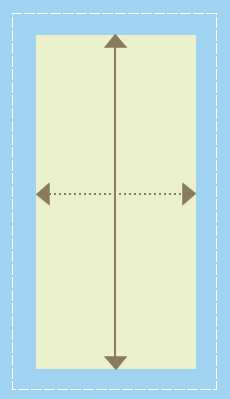
Rectangular or Square Tables
Tablecloth width = Table width + (drop × 2)
Tablecloth length = Table length + (drop × 2)
Example: Your table is 90cm wide and 180cm long, and you want a 20cm drop.
- Tablecloth width: 90 + (20 × 2) = 130cm
- Tablecloth length: 180 + (20 × 2) = 220cm
So you'd look for a tablecloth of approximately 130cm × 220cm.
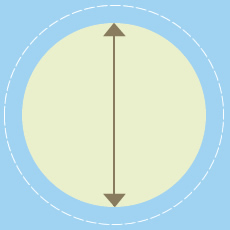
Round Tables
Tablecloth diameter = Table diameter + (drop × 2)
Example: Your round table is 120cm across, and you want a 20cm drop.
- Tablecloth diameter: 120 + (20 × 2) = 160cm
You'd need a 160cm round tablecloth.
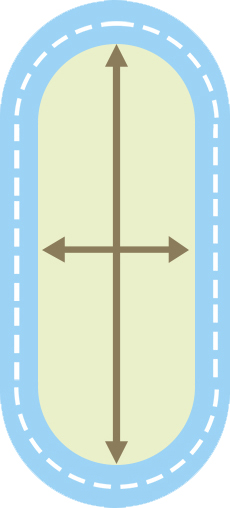
Oval Tables
Oval tables work the same way as rectangular ones — measure the longest length and widest width, then apply the formula above.
Quick Reference: Common UK Table Sizes
Not sure of your exact dimensions? Here are the most common UK table sizes and recommended tablecloth sizes to match.
Rectangular Dining Tables
All measurements shown as width × length.
| Table Size (W × L) | Seats | Tablecloth for 20cm Drop | Tablecloth for 30cm Drop |
|---|---|---|---|
| 75 × 120cm | 4 | 115 × 160cm | 135 × 180cm |
| 90 × 150cm | 4–6 | 130 × 190cm | 150 × 210cm |
| 90 × 180cm | 6–8 | 130 × 220cm | 150 × 240cm |
| 100 × 200cm | 8 | 140 × 240cm | 160 × 260cm |
| 100 × 240cm | 8–10 | 140 × 280cm | 160 × 300cm |
Round Tables
| Table Diameter | Seats | Cloth for 20cm Drop | Cloth for 30cm Drop |
|---|---|---|---|
| 90cm | 4 | 130cm | 150cm |
| 110cm | 4–5 | 150cm | 170cm |
| 120cm | 5–6 | 160cm | 180cm |
| 150cm | 6–8 | 190cm | 210cm |
| 180cm | 8–10 | 220cm | 240cm |
Standard Trestle Tables
Trestle tables are a slightly different situation — they're most commonly used at events, village halls, markets, and buffets, and they come in fairly standard sizes.
The most common UK trestle table size is 2ft 6in × 6ft (76cm × 183cm). For this table, a 130cm × 178cm cloth gives a neat 25–27cm drop all round. If you want a full floor-length drape for a buffet or display table, go for 220cm × 180cm or similar.
What About Extensions and Leaves?
If your table has a leaf or extension, always measure it with the leaf in place when choosing your tablecloth. You'll need a separate, larger cloth for when the table is extended — or choose a size that fits the extended table and simply folds neatly underneath when the leaf is removed.
Choosing the Right Drop for the Occasion
Still unsure which drop length is right for you? Here's a quick guide by occasion:
Everyday family dining — Keep it simple with a 15–20cm drop. It's practical, easy to tuck chairs in, and won't trail onto the floor when children are around.
Dinner parties and entertaining — Aim for 25–30cm. It looks intentional and elegant without being overly formal.
Weddings and formal events — Go full floor-length. A floor-grazing cloth transforms any table and gives a beautifully polished finish. For seated dinners, the cloth should stop just above the seat of the chairs (roughly 50–60cm from the floor).
Buffet and display tables — Full floor-length every time. This hides whatever is stored underneath and makes the table look like a proper display feature.
A Note on Fabric and Fit
Different fabrics behave differently once they're on the table. A stiff polycotton will hold its shape and sit quite precisely. A softer linen has a little more drape and may fall slightly differently — often in a more relaxed and elegant way.
When in doubt, go slightly larger rather than smaller. A cloth with a little extra drop always looks more intentional than one that's a touch too short.
Standard Fabric Widths — What You Need to Know
This is something a lot of people don't think about until they're mid-order: different types of tablecloth fabric come in standard roll widths, and that width places a natural limit on how wide a single cloth can be. Here's what to bear in mind:
- Oilcloth — available up to 132cm wide
- PVC Vinyl — available up to 140cm wide
- Acrylic — available up to 144cm wide
- Water-repellent cloth — available up to 144cm wide
- Fabric tablecloths — typically 135cm wide as standard, though wider options (up to 280cm wide) are available for larger tables
Why does this matter? If your required cloth width (table width + drop on both sides) exceeds the standard roll width for your chosen fabric, there are two solutions depending on the material. For most fabrics we can add a centre seam, joining two pieces neatly down the middle of the cloth. For certain sizes we can also offer side panels — additional strips sewn along the edges to achieve the exact width you need. Both options give you a finished, professional result rather than an awkward fit.
It's always worth double-checking your required width before ordering, especially for large dining tables or wide trestle setups. If you're not sure which option applies to your chosen fabric, just get in touch — we're happy to advise.